
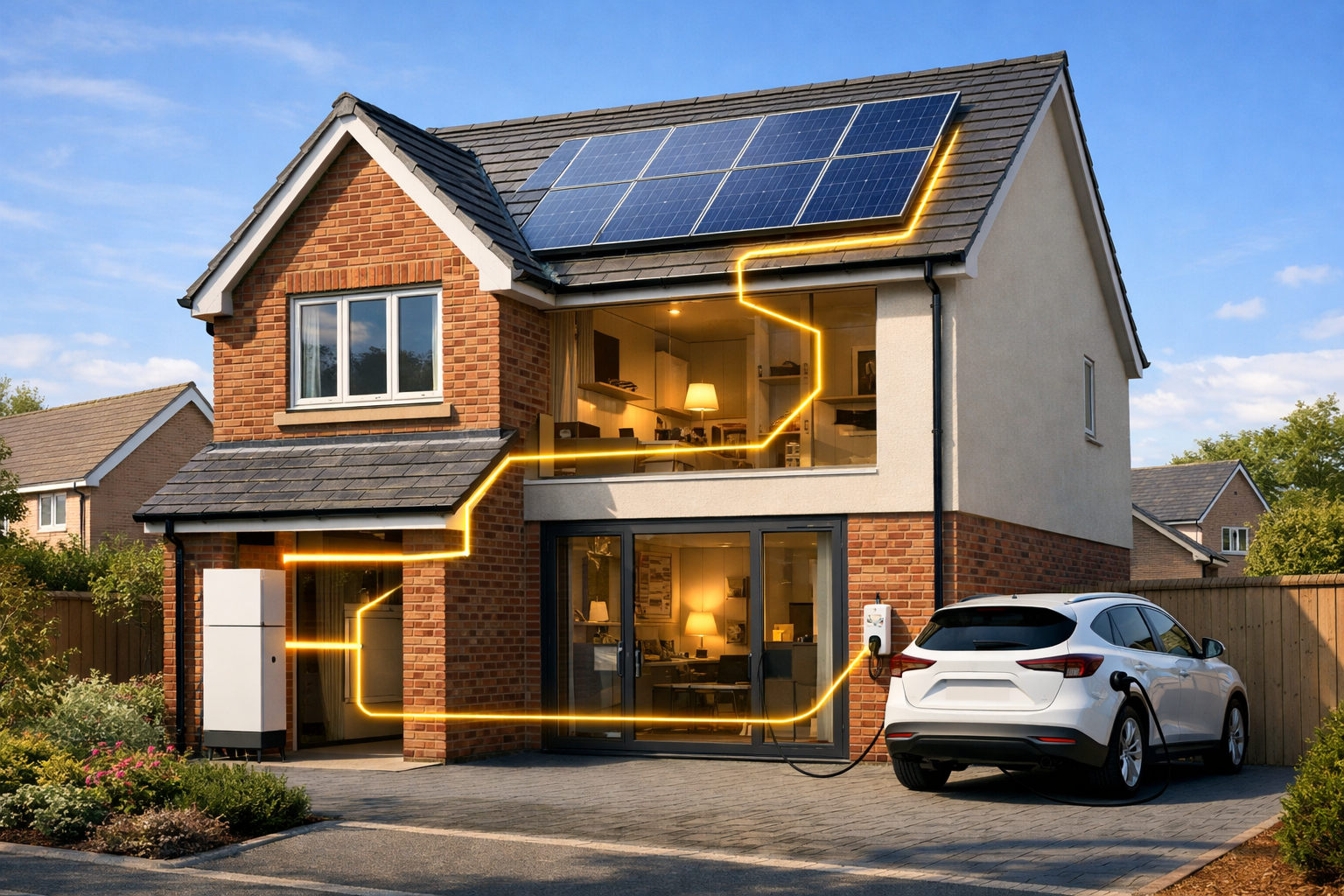
The main considerations for installers and for customers wishing to install solar panels on their homes are:
“Panels should not be installed above the highest part of the roof (excluding the chimney)”
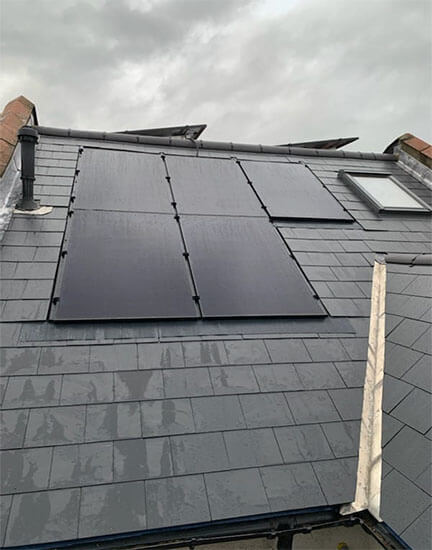
This is easily achievable and standard practice for pitched or sloping roofs. Solar panel design engineers will design solar systems to fit on the roof and not extend beyond the ridge.
Micro-Generation Certification Scheme (MCS) recommends leaving a 300 – 400 mm gap between the top of the array and the ridge of the roof. This is to avoid putting pressure on your roof and panels from wind, so there are multiple reasons to conform to this guidance.
“[Solar panels] should project no more than 200mm from the roof slope or wall surface.”
Again, for sloping roofs it is standard practice to install panels under 200mm from the slope of the roof. Solar mounting frames used to attach solar panels to pitched roofs are low profile and the panels won’t project more than 200mm from the roof slope.
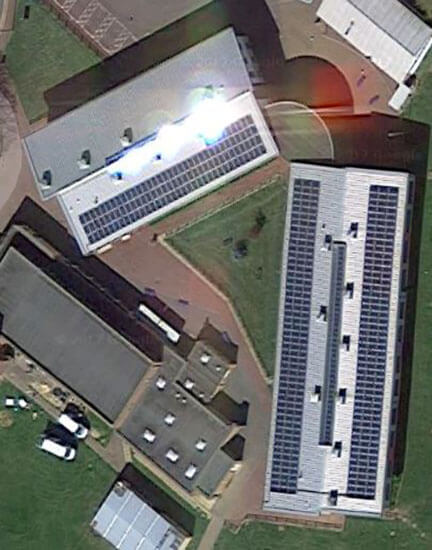
There are a different set of rules for planning permission on commercial buildings. The height above the roof requirement of 200mm still applies, and standard mounting systems will all comply with this.
At the edges, base and apex of the roof a gap of 1m must be left. For large metal roofs, this requirement is sensible from a wind-loading perspective and to allow space for scaffold edge protection during the build and a safe working environment.
For smaller tiled roofs on commercial properties, such as you might find on schools or offices, leaving 1m perimeter can limit the installed capacity of solar panels, and make systems look a little peculiar. In these cases, we’d recommend an informal conversation with the planning department.
Many people assume that you’ll need planning permission to install solar panels in conservation areas. However, that’s not always the case.
The only difference to permitted development in conservation areas is:
“If your property is in a conservation area, or in a World Heritage Site, panels must not be fitted to a wall which fronts a highway.”
Solar panels fitted to roofs facing the street are still considered permitted development in most cases. Panels fitted to a wall which fronts a highway in a conservation area are not Permitted Development.
Article 4 Directions are fairly rare and exist in parts of some conservation areas. They are used as a way of protecting the character and appearance of some areas where there is a particular historical or cultural significance.
An article 4 direction limits the works that can be carried out under Permitted Development and if you live in an area where there is an article 4 in place you probably already know about it! You can check by visiting your local council website or calling the planning department.
Article 4’s often only apply to basement conversions or converting your house to an HMO (House of Multiple Occupation) and if an Article 4 is in place, it may mean that you need to apply for planning permission to fit solar. If so, we’d recommend contacting a planning consultant or architect as the application is likely to be sensitive and they will give you the best chance of success.
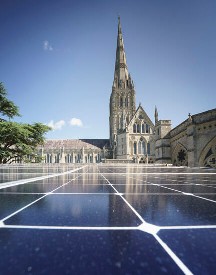
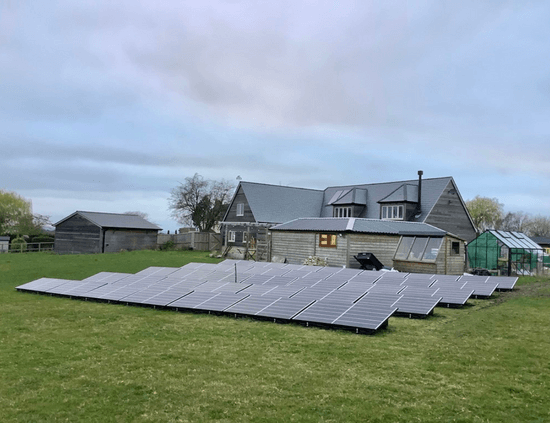
The short answer is yes, you do need planning permission for most ground mount solar arrays.
Very small arrays are considered permitted development, but “the size of the array should be no more than 9 square metres or 3m wide by 3m deep”. In practice this would only allow an array of 4-5 panels, which would not be economically worth it in most cases.
An alternative is to install a moveable ballasted system such as this one, which can be considered a temporary structure and therefore doesn’t need planning permission.
Some customers have been happy to submit the application themselves while others prefer to use an architect or planning consultant.
If you are not already in touch with an architect or planning consultant, we can recommend one to you.